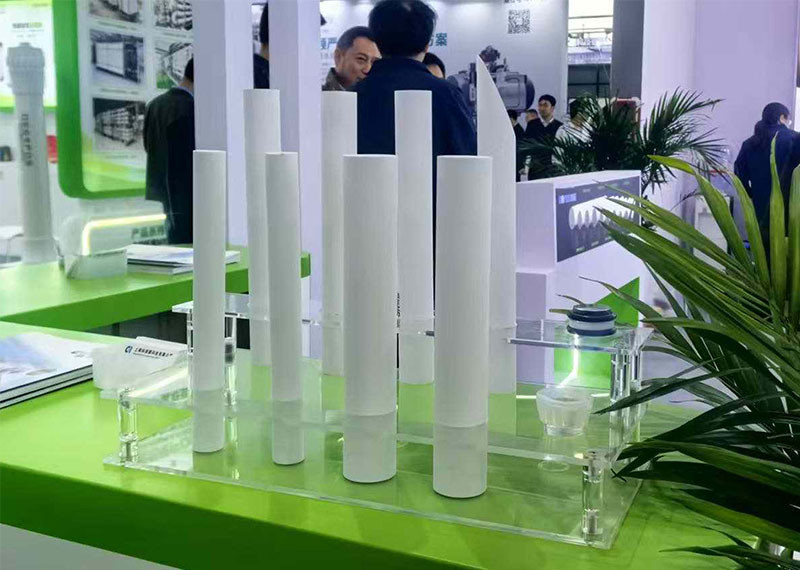
Used to remove biomass and fine impurities from fermentation broths before further purification in downstream, TANGENT CRM series MF/UF tubular ceramic membranes could be found in the solutions of many fermentation plants and bioengineering & bio-equipment companies at this BIO CHINA 2026 exhibition.
One thing became clear from the processes on display: in bio-fermentation and synthetic biology plants, membrane selection is rarely just about achieving a certain filtration accuracy.
Fermentation broths are complex and can change significantly from one product or production stage to another. The real challenge is maintaining stable filtration when the feed contains heavy foulant like biomass, proteins, colloids and fine particles—and when regular cleaning is unavoidable.
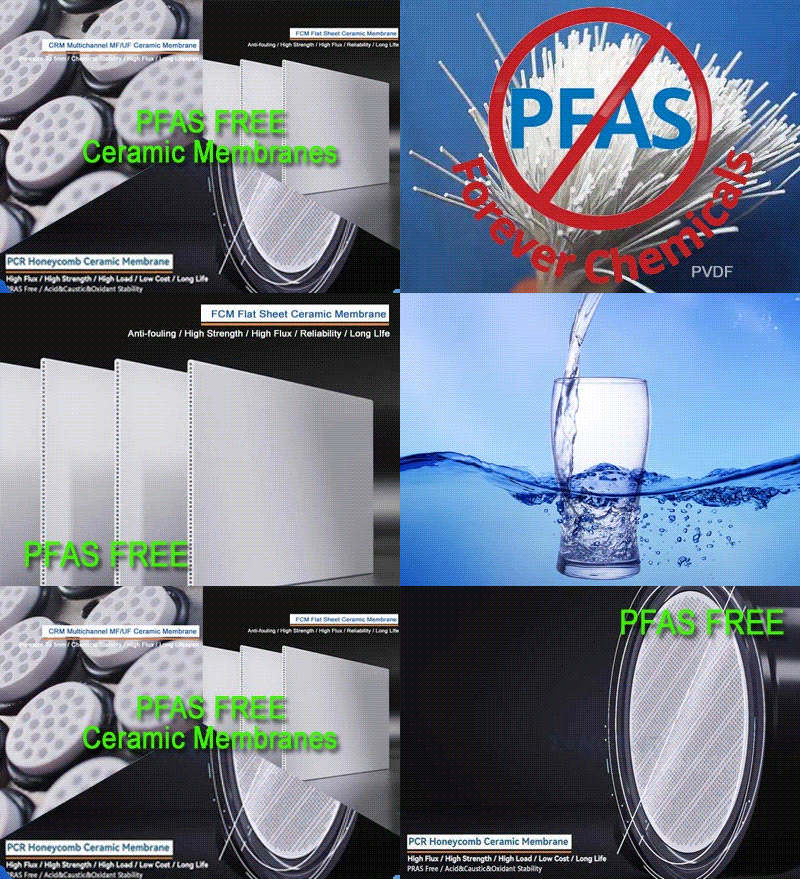
This is where ceramic membranes show their practical value. The unique mechanical and chemical stability allows them to withstand cross-flow operation and repeated cleaning while maintaining a stable nanometer porous structure. For demanding fermentation broths, this can mean more consistent filtration and greater operational reliability over years of lifespan.
We also noticed that ceramic membranes were rarely presented as an isolated technology. They were often positioned at the front end of a larger downstream process, preparing the feed for subsequent polymeric UF/NF membrane filtration, ion exchange, evaporation or crystallization.
This may be the more meaningful trend: the value of ceramic membranes in bio-fermentation is increasingly being judged by how well they support the entire process—not simply by the clarity of the filtrate.
At TANGENT, we believe the right solution begins with understanding the actual feed, identifying the correct position for membrane filtration and verifying the process through testing.