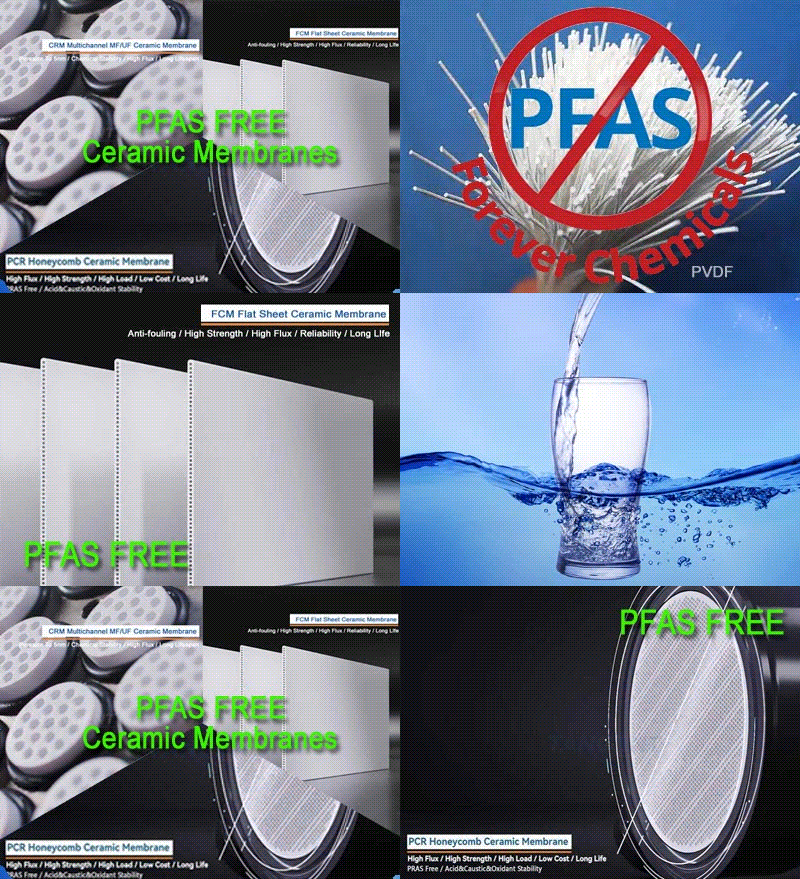
Against the backdrop of ecological civilization construction and global dual-carbon goals, inorganic ceramic membrane separation technology, as a key energy-efficient technology, is evolving toward a greener and low-carbon pathway, providing reliable technical support for low-carbon development strategies. Inorganic membrane separation technology is an emerging, efficient and precise separation technology successfully developed in the 20th century. Since the 1980s, inorganic membranes made of inorganic materials such as ceramics, metals, metal oxides, and glasses have gained wide adoption in the membrane industry due to their excellent chemical stability, thermal stability, and high mechanical strength. It is widely used in industrial processes such as energy, resources, environmental protection, metallurgy, light industry, chemical industry, petrochemical industry, and biochemical industry. At present, inorganic membrane separation technology and its processes and equipment have been commercialized, especially ceramic membranes, which have more obvious application advantages under harsh conditions (such as high temperature, high pressure, and corrosive systems).
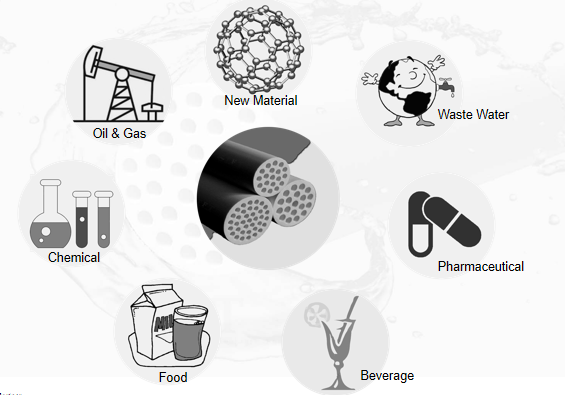
The wide application of ceramic membranes in food and beverage, pharmaceutical and chemical industry, water treatment, new energy and other fields has further promoted the continuous transformation of my country's industry towards energy conservation, emission reduction, green and sustainable development model.
The development of the ceramic membrane industry relies heavily on product and technological innovation. It is essential to align industry progress with high-level market requirements and low-carbon development goals.
Focusing on key directions including ceramic membrane application system assessment, energy saving and consumption reduction, resource and energy recovery, reclaimed water utilization, membrane material regeneration and digital transformation, the industry should continuously innovate and upgrade membrane manufacturing technologies. Efforts will be made to develop high-performance functional ceramic membrane materials and products, broaden application scenarios, and further support the achievement of global dual-carbon development goals.