English
Postion:
TANGENT, Your Membrane Partner
Microfiltration I Ultrafiltration I Nanofiltration Ceramic Membranes
Membrane Separation I Clarification I Purification I Concentration for Process Industry
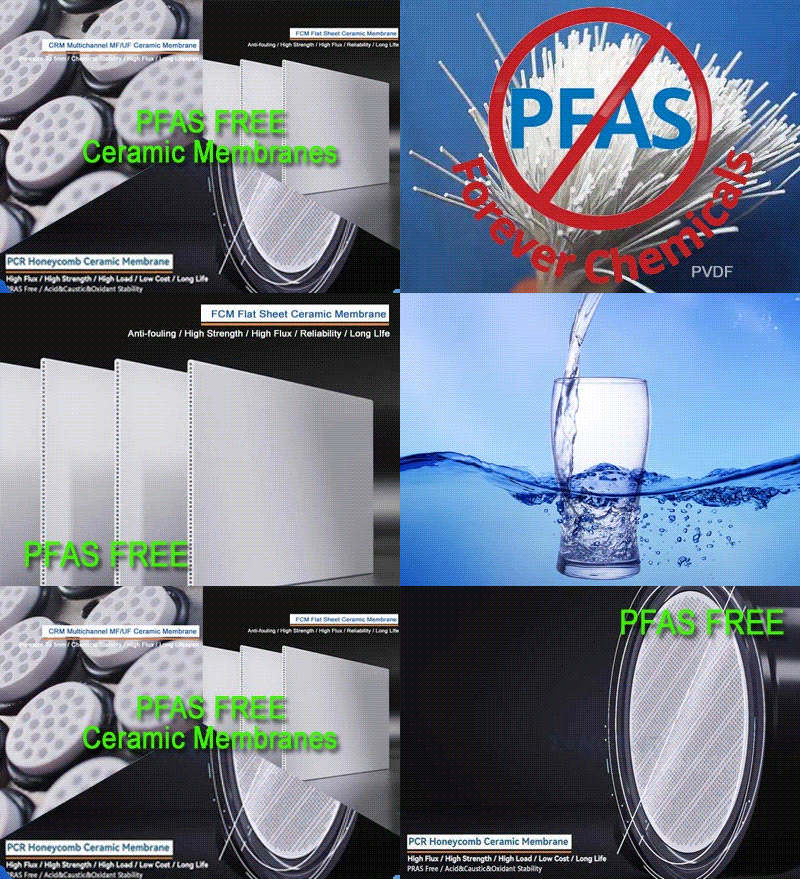
PFAS-Free Ceramic Membranes: Europe’s 2026 Water Treatment Answer
2026-01-08
PFAS-Free Ceramic Membranes: Europe’s 2026 Water Treatment Answer
Per- and polyfluoroalkyl substances (PFAS) have emerged as one of the most pressing regulatory challenges confronting the global water industry. Thanks to their extreme persistence, resistance to degradation, and long-term health risks, PFAS are no longer regulated as conventional contaminants—they’re being treated as structural environmental hazards. In Europe, this shift has culminated in the revised Drinking Water Directive (EU) 2020/2184, set to fully take effect in January 2026.​
Under this directive, drinking water supplied to consumers must meet ultra-low PFAS limits: a maximum concentration of 0.50 μg/L for total PFAS, and 0.10 μg/L for the sum of priority PFAS compounds like PFOA. These thresholds apply across all EU Member States and are enforced at the point of consumption. More critically, the regulation reflects a broader policy ethos: long-term compliance won’t just be measured by water quality outcomes—it will require responsible material selection and source-level risk elimination.​
As a result, PFAS-containing materials used in water treatment processes are facing heightened scrutiny. Polymeric membranes based on PVDF, long hailed as an industry standard, are now structurally disadvantaged under the new regulatory framework. While cost-effective and widely deployed, PVDF membranes offer limited PFAS removal efficiency at ultra-low concentrations—and they’re classified as part of the PFAS family themselves. This creates inherent regulatory uncertainty, positioning such systems as transitional stopgaps rather than future-proof solutions.​
Meanwhile, water utilities and industrial operators are grappling with soaring compliance costs, mandatory PFAS monitoring requirements, and pressure to align with EU sustainability funding criteria. These forces are accelerating the shift toward PFAS-free treatment technologies that deliver reliable performance while minimizing long-term regulatory risk and total life-cycle costs.​
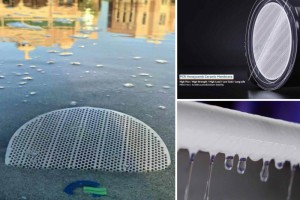
Ceramic membrane technology is increasingly recognized as a robust answer to these challenges. Manufactured from inorganic materials like alumina and titania, ceramic membranes are 100% PFAS-free—fully aligned with current and anticipated EU regulatory demands. Their high chemical and mechanical stability enables consistent PFAS removal even under harsh operating conditions, while their simplified process design cuts down on system complexity.​
While ceramic membranes typically require a higher upfront investment, their long service life, fouling resistance, and stable operation translate to significantly lower total CAPEX and OPEX over the full system lifecycle. What’s more, their durability and recyclability support sustainability goals and long-term infrastructure resilience.​
As Europe marches toward a PFAS-regulated future, water treatment strategies are being redefined. Technologies reliant on PFAS-based materials face growing limitations, while PFAS-free ceramic membranes are emerging as a mature, reliable, and future-ready foundation for compliant water treatment systems.

TANGENT Showcased In The 2025 New Materials Entrepreneurs Conference
2025-12-15
TANGENT Showcased In The 2025 New Materials Entrepreneurs Conference
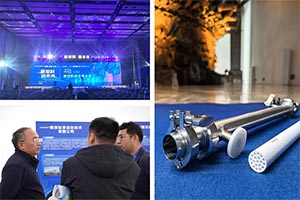
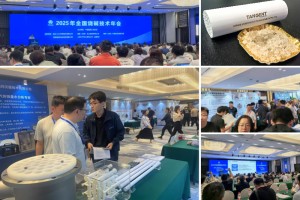
TANGENT FLUID actively participated in the 2025 New Materials Entrepreneurs Conference held on December 12-13, 2025 in Shanghai, an influential industry event gathering nearly 1,000 professionals including experts, scholars and entrepreneurs from the global new materials sector. The conference served as a high-end platform for in-depth exchanges, focusing on in-depth discussions on the current development status, technological innovation trends and future development directions of the new advanced material industry, aiming to promote industrial cooperation and technological upgrading.

As a rapidly advancing porous filtration material, ceramic membrane has attracted wide attention in the industry with its outstanding performance and broad application potential. It has been widely used in synthetic biology, chemical engineering, food processing, new energy, healthy drinking water and other key fields, effectively promoting efficiency improvement and quality upgrading in related industries. During the conference, TANGENT communicated with industry peers on ceramic membrane technology innovation and application expansion, further enhancing industry influence and laying a solid foundation for in-depth cooperation in the new materials field.
2025-11-17
Efficient POME Treatment via CMX Ceramic Membrane Technology
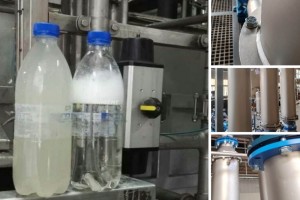
Palm Oil Mill Effluent (POME) contains high solid content, oil, and a high organic load. The traditional pond-based treatment method occupies a large area and often fails to meet discharge standards. The CMX ceramic membrane technology developed by TANGENT is made of high-strength inorganic materials, featuring resistance to high temperatures, chemical corrosion, abrasion, and fouling. It can operate stably for more than ten years. Through crossflow filtration, it reduces fouling and maintains permeate flux. Additionally, it can recover oil from POME to increase revenue while reducing the volume of wastewater. Economically, this technology lowers membrane replacement and operational costs and saves land. Environmentally, it helps factories meet discharge standards and achieve water recycling. It is a reliable solution for POME treatment, and TANGENT can provide relevant technical support.
2025-09-22
EU PVDF Restrictions Gather Pace: Ceramic Membranes Emerge as Key for Water Treatment Transformation
As the EU advances the legislative process for a comprehensive PFAS ban (including PVDF), PVDF—once accounting for over 80% of the global water treatment membrane market—faces strict restrictions due to its slow degradation and bioaccumulation. The EU notes PVDF membranes in water treatment have high substitution potential, with ceramic membranes emerging as the optimal alternative. Ceramic membranes offer advantages like 3-5x longer service life, nanoscale precision filtration, superior stability, and sustainability. They gain rapid EU market acceptance, need no large-scale equipment retrofitting for PVDF replacement, and create long-term value. With the 2026 EU mandatory standard approaching, deploying ceramic membranes is critical for market opportunities.
2025-08-22
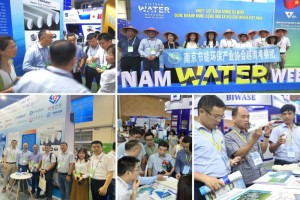
A fantastic experience at Vietnam Water Week 2025
Great interest was shown in TANGENT's ceramic membrane technology, which supports three key applications: wastewater treatment, drinking water filtration, and industrial process separation. As Vietnam undergoes rapid development, innovative technologies like this are set to deliver substantial benefits across diverse industries.
2025-07-22
Ceramic Membranes in the Petrochemical Industry
Ceramic membranes are crucial in the petrochemical industry, thanks to their thermal stability, chemical inertness, and mechanical robustness. They enable fine solid-liquid separation under harsh conditions, treat wastewater by separating oil-in-water emulsions, and aid catalyst recovery. Withstanding high temperatures and aggressive chemicals, they’re vital for high-pressure reactions and gas purification. They also facilitate hydrocarbon separation, replacing energy-heavy distillation, and solvent purification, boosting sustainable operations by enhancing efficiency and reducing waste.
2025-06-20
TANGENT Showcased in 2025 China Caustic Soda Technology Annual Conference
The 2025 China Caustic Soda Technology Annual Conference, held in Nanjing on June 19 - 20, 2025, gathered over 500 industry experts. It served as a key platform for knowledge exchange. TANGENT's cutting - edge ceramic membrane for primary brine refining stood out, offering reliability, efficiency, energy - saving and environmental benefits, reducing production costs. Attendees lauded its potential. The conference also included speeches and workshops, driving technological progress and collaborative growth in the chlor - alkali industry.
2025-05-20
Ceramic Membranes: Revolutionizing Industrial Sustainability
Ceramic membranes revolutionize industries by replacing traditional filtration, enabling continuous processes (e.g., catalyst recovery) and cutting production time. Their energy-efficient operation reduces CO₂ emissions and chemical use, particularly in water treatment. This dual-advantage technology boosts productivity while lowering environmental impact, emerging as a key solution for sustainable industrial transformation.
2025-05-06
Ceramic Membranes for Corrosive Waste Liquid Recovery
In modern industrial production, the generation of corrosive waste liquid is an inevitable by - product, posing significant challenges to both environmental protection and resource utilization. In this context, ceramic membranes have emerged as a highly effective solution for corrosive waste liquid recovery.
2025-04-21
Ceramic Membrane for Brine Purification
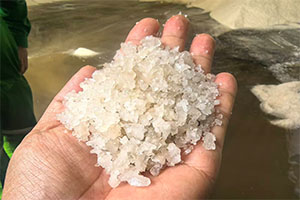
Ceramic membrane is successfully applied for purification of NaCl salt of pharmaceutical grade. Nearly all the suspended solid impurities in the brine will be rejected by membranes. Machine skid is made of titanium alloy.
2025-04-07
CRBR vs Clarifier Comparison
The Ceramic membrane brine refinery system (CRBR) constitutes a remarkable innovation within the caustic soda chlor alkali industry. Notably, it can generate high quality brine without using unnecessary chemical agents. In contrast. Traditional methods, such as clarifier systems and PTFE filters, frequently rely on substances like PAM,PAC, and α-cellulose precoating to augment the purification process. However, these chemicals have the potential to brine impurities into the brine. Such impurities may degrade the quality of the final product and escalate maintenance costs in downstream processes, especially in electrolyzers.
2025-03-19
Ceramic Membranes for L-Lysine Downstream Extraction
Ultrafiltration ceramic membranes have emerged as a promising technology in the L-Lysine industry, with several advantages over traditional separation methods.
 1 2 3 4 5 
Copyright 2020 © Nanjing Tangent Fluid Technology Co., Ltd
Phone
WhatsApp
Email
Skype
We use cookies to enhance your browsing experience, serve personalized ads or content, and analyze our traffic. By clicking 'Accept', you consent to our use of cookies. Lern more