How to Improve Starch Hydrolysate Clarification in Glucose Syrup Production
In starch-based sweetener production, good syrup quality does not start at the final refining step. It starts much earlier — with effective clarification of the starch hydrolysate.
After starch is liquefied and saccharified, the resulting hydrolysate contains the desired soluble sugars, but it may also contain residual starch, proteins, colloidal substances, oils, fibers and other suspended impurities. Before the syrup enters downstream purification, these impurities need to be removed effectively.
Why is starch hydrolysate clarification important?
Clarification is more than simply making the syrup look clear.
Impurities carried into downstream refining can increase the load on activated carbon, ion-exchange resins and polishing processes. For this reason, glucose syrup clarification is normally positioned after liquefaction and saccharification as an important primary filtration step.
The real objective is therefore to achieve two things at the same time:
remove non-sugar impurities effectively while allowing valuable soluble sugars to pass into the clarified stream.
This balance between filtrate quality and sugar recovery is one of the most important considerations when selecting a clarification process.
Where conventional filtration becomes challenging
Traditional starch hydrolysate clarification can use technologies such as filter presses, rotary vacuum drum filters and filter aids including diatomaceous earth or perlite.
These processes are well established, but filter-aid consumption, solid waste generation, handling requirements and variation in filtration performance can become important operational considerations, especially in continuous production.
For producers evaluating an alternative process, the question is not simply whether another technology can produce clear syrup.
A more useful question is:
Can the clarification step provide consistent filtrate quality, high sugar recovery and stable continuous operation while reducing the burden of consumable filter aids?
Ceramic membrane clarification: separating impurities from soluble sugars
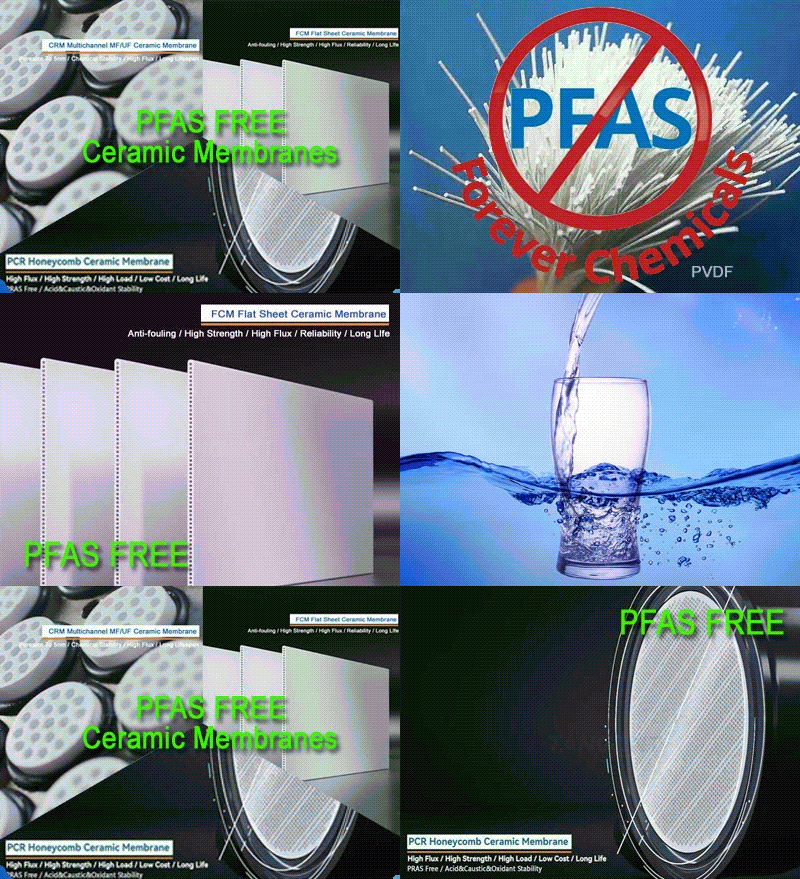
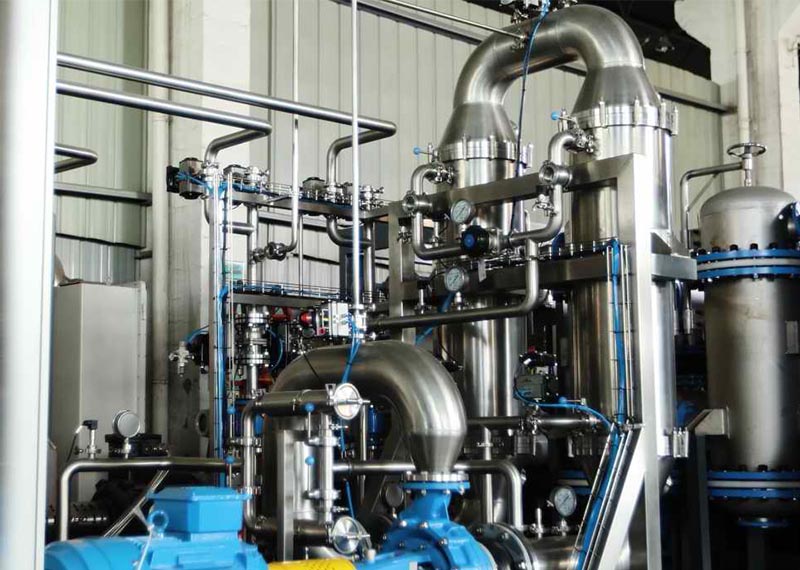
Tubular ceramic membranes operate in cross-flow mode. Instead of forcing the entire feed directly into a filter cake, the hydrolysate flows tangentially along the membrane surface.
Suspended solids, residual starch, proteins and colloidal impurities are retained and concentrated, while water and dissolved sugars pass through the membrane as clarified permeate. Extensive project experience from numerous stable, high-quality industrial operations have demonstrated the use of ceramic microfiltration and ultrafiltration membranes for corn syrup and glucose-fructose syrup clarification.
This makes ceramic membrane filtration particularly useful as a clarification and pretreatment step before further syrup refining.
It is important, however, to define this role correctly.
Ceramic microfiltration or ultrafiltration does not automatically replace every downstream purification process. Color bodies, dissolved salts and other small molecular impurities may still require activated carbon, ion exchange, nanofiltration or other refining technologies depending on the required final syrup specification.
The value of better clarification lies partly in producing a cleaner and more stable feed for these downstream operations.
What determines whether ceramic membrane filtration will work well?
Starch hydrolysates are not identical.
Raw material, starch quality, DE value, solids concentration, temperature, impurity composition and upstream hydrolysis conditions can all influence membrane performance.
Membrane pore size alone therefore cannot determine the result. Permeate flux, impurity retention, sugar recovery, fouling behavior and cleaning recovery should be evaluated together under representative process conditions. Membrane fouling and operating conditions remain important subjects in starch hydrolysate membrane research.
For a new application, pilot testing with the actual process liquid is often more meaningful than selecting a membrane based only on nominal pore size.
Clarification should be evaluated as part of the whole refining process
For starch-based sweetener producers, the best clarification technology is not necessarily the one that only produces the highest instantaneous filtration rate.
The more important question is how the clarification step affects the entire production line:
filtrate quality, sugar recovery, downstream refining load, cleaning frequency, consumable use, waste generation and long-term operating stability.
When evaluated from this process perspective, ceramic membrane cross-flow filtration can provide an alternative approach to conventional starch hydrolysate clarification — particularly where stable filtration quality and continuous operation are important.
TANGENT brings proven expertise in starch hydrolysate clarification, backed by numerous successful projects. Recognising that feedstream characteristics can vary significantly due to differences in raw materials and upstream processing from case to case, we offer custom-designed laboratory- and pilot-scale testing systems tailored to each customer’s specific liquor properties and operating conditions. Through systematic experimentation, we determine the optimal process parameters for each project, ensuring reliable flux, consistent permeate quality, and robust scale-up feasibility before committing to full-scale production.