With the rapid advancement of the biopharmaceutical industry, downstream separation and purification technologies are facing unprecedented challenges.
Ceramic membranes, leveraging their unique material properties and excellent separation performance, are emerging as a key technology in the field of biopharmaceutical & Biosynthesize separation and purification.I. Technical Advantages of Ceramic Membranes
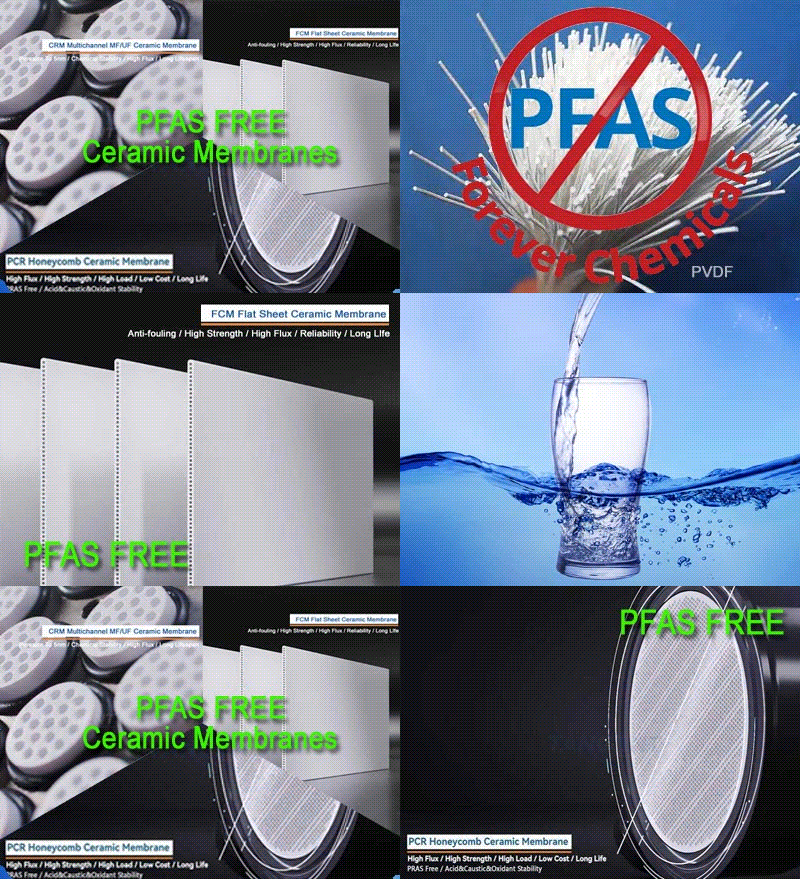
.png) Ceramic membranes are manufactured from inorganic materials such as Al2O3, ZrO2, TiO2 through high-temperature sintering. In biopharmaceutical applications, ceramic membranes demonstrate the following core advantages:
Ceramic membranes are manufactured from inorganic materials such as Al2O3, ZrO2, TiO2 through high-temperature sintering. In biopharmaceutical applications, ceramic membranes demonstrate the following core advantages:· High Separation Precision: Ceramic membranes possess a narrow pore size distribution, enabling precise separation from microfiltration to ultrafiltration. They can efficiently retain impurities like bacteria, cell debris, and colloidal particles.
· Adaptability to Extreme Conditions: Biopharmaceutical production processes often involve high-temperature sterilization and strong acid/alkaline cleaning. Ceramic membranes can withstand extreme pH environments (0-14) and exhibit excellent high-temperature resistance.
· No Leachables and Biological Safety: As inorganic materials, ceramic membranes do not release plasticizers, additives, or other impurities, fully complying with GMP requirements.
· Strong Anti-fouling Capability: The hydrophilic surface of ceramic membranes effectively reduces the adsorption of organic substances like proteins, slowing down the membrane fouling process.
· Excellent Cleaning Recovery: Ceramic membranes can be cleaned-in-place (CIP) using strong acids, bases, and oxidants. Membrane flux recovery rates can reach over 95%.
II. Major Applications in Fermentation & Biopharmaceuticals
1. Fermentation Broth Clarification and Cell Separation
.png) In the production of antibiotics, ceramic membrane technology enables one-step clarification of the fermentation broth, producing a clear permeate that can be directly used in subsequent extraction or chromatography steps.
In the production of antibiotics, ceramic membrane technology enables one-step clarification of the fermentation broth, producing a clear permeate that can be directly used in subsequent extraction or chromatography steps.
In the production of API,vitamins and amino acids, such as the Vitamin C precursor, Lysine, and glutamic acid, ceramic membranes are used to remove bacterial proteins from the fermentation broth.
2. Cell Disruption Broth Treatment
Ceramic membranes with pore sizes ranging from 50-200 nm allow for efficient retention of cell debris while permitting the target proteins or inclusion bodies to pass through, achieving efficient solid-liquid separation.
3. Vaccine Production Process Optimization
In viral vaccine production, ceramic membranes can be used to harvest virus particles from cell culture media or to remove cell debris.
4. Purification of Buffers and Process Water
In biopharmaceutical manufacturing, ceramic membranes can serve as a pre-treatment unit for final filtration. They effectively remove particles, colloids, bacteria, and endotoxins from water, protecting downstream ultrafiltration membranes or chromatography columns and extending the lifespan of expensive chromatography resins.
For further information on the specific applications of ceramic membranes in the biopharmaceutical field, please contact us. Our technical team is ready to provide professional solutions.
.png)